


A Warp Stop Bracket may look like a small supporting part in a weaving machine, but its influence on production stability is far from small. When the bracket is poorly matched, weakly supported, or difficult to install, mills may face frequent warp stop motion misalignment, longer yarn break checking time, unstable bracket seating, and unnecessary downtime. This article explains how buyers, maintenance teams, and loom managers can evaluate a Warp Stop Bracket from the practical side: structure, material selection, loom compatibility, installation accuracy, long-term durability, and supplier support. It also discusses why choosing a specialized manufacturer such as Changshu Changxin Textile Equipment Co., Ltd. can help mills reduce replacement uncertainty and maintain smoother weaving operations.
- Article Outline
- Why Can a Small Warp Stop Bracket Affect the Whole Weaving Line?
- What Problems Do Buyers Usually Face When Replacing Warp Stop Brackets?
- Which Details Should Be Checked Before Buying a Warp Stop Bracket?
- What Should a Reliable Warp Stop Bracket Offer in Daily Production?
- How Does Customization Reduce Installation and Maintenance Risk?
- Why Does Supplier Experience Matter More Than a Low Unit Price?
- FAQ
- Conclusion
Article Outline
This blog is written for textile mills, loom maintenance teams, spare parts buyers, and procurement managers who need a clearer way to judge whether a Warp Stop Bracket is suitable for their machines. Instead of treating the product as a simple spare part, the article breaks down the real concerns behind the purchase decision.
- How a Warp Stop Bracket supports stable warp stop motion operation
- Why wrong sizing or weak support can increase downtime
- How material, structure, and fitting accuracy influence service life
- Why customized brackets are often more practical than generic replacements
- How to communicate technical requirements with a supplier before ordering
- What questions buyers should ask before confirming bulk purchase
Why Can a Small Warp Stop Bracket Affect the Whole Weaving Line?
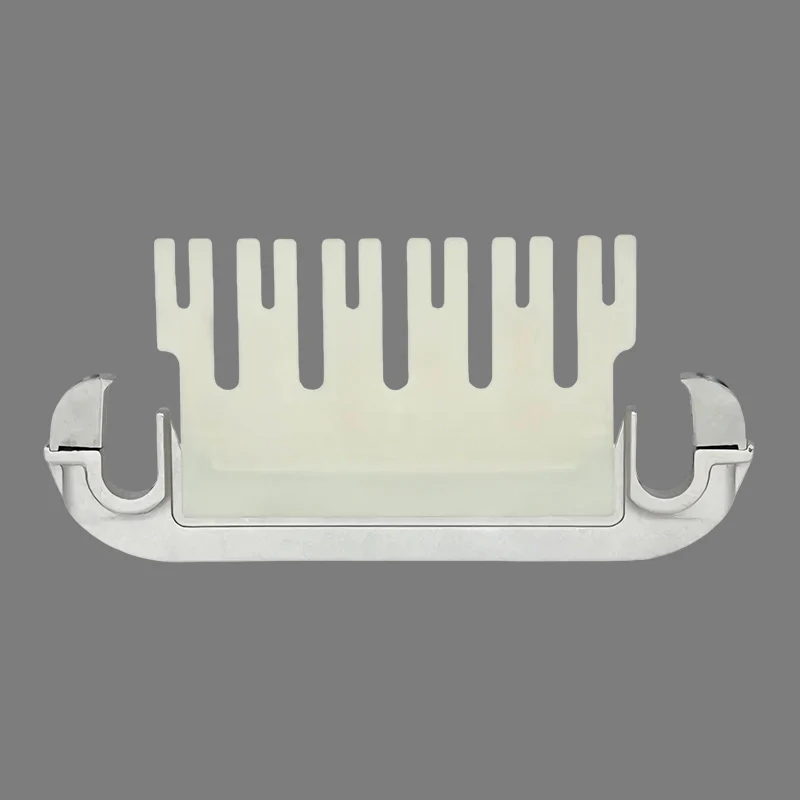
In a weaving mill, production loss rarely starts with something dramatic. It often begins with a small mismatch: a bracket that does not sit firmly, a support point that wears too quickly, or a component that looks close enough but fails to hold the warp stop motion system in the correct position during continuous running. A Warp Stop Bracket works in this kind of demanding space. It is not the largest part of the machine, but it helps keep the warp stop structure properly supported, aligned, and ready to respond when a warp yarn breaks.
When the bracket performs well, operators may barely notice it. The warp stop motion stays steady, the drop wires or related components remain properly positioned, and maintenance staff can focus on normal production control. When the bracket performs poorly, however, the effect spreads quickly. A loose or inaccurate Warp Stop Bracket can make the warp stop system harder to adjust, slow down fault checking, and force workers to stop the loom more often than necessary.
For mills running air-jet, water-jet, rapier, or other shuttleless looms, repeatability matters. The same action happens thousands of times during production. A bracket that appears acceptable during a short inspection may fail after vibration, load, heat, humidity, oil exposure, and repeated operator handling. That is why buyers should look beyond the surface and ask whether the bracket can maintain stable support over time.
What Problems Do Buyers Usually Face When Replacing Warp Stop Brackets?
Many mills do not replace brackets because they want to upgrade. They replace them because something has started to go wrong. The old bracket may be worn, cracked, deformed, loose, or no longer compatible with a changed production setup. In other cases, a mill may have several loom models from different brands, making spare part selection more complicated than expected.
Buyers often face five practical problems. First, the dimensions are uncertain. A supplier may offer a bracket that looks similar, but small differences in width, slot position, fixing points, or support shape can create installation trouble. Second, the material may not match the working environment. If the bracket is too weak, too brittle, or too easy to wear, it may shorten the maintenance cycle. Third, communication between purchasing and production is not always detailed enough. The buyer may receive a model name, but not the actual installation space or technical drawing.
Fourth, mills sometimes focus too much on unit price. A cheaper Warp Stop Bracket may seem attractive during quotation comparison, but if it causes extra fitting work, unstable operation, or premature replacement, the real cost becomes higher. Fifth, after-sales support is often overlooked. When the bracket does not fit, the buyer needs a supplier who can discuss the problem clearly, not simply say that the product was shipped according to order.
- Wrong size can delay installation and restart time.
- Weak structure can increase vibration-related instability.
- Poor surface finishing can affect handling and long-term wear resistance.
- Lack of drawing confirmation can lead to repeated sample revisions.
- Generic parts may not meet the needs of different loom brands or warp widths.
Which Details Should Be Checked Before Buying a Warp Stop Bracket?
Before ordering a Warp Stop Bracket, the buyer should collect enough information from the workshop. A simple product name is not always enough. The loom model, warp stop frame structure, working width, bracket quantity, installation method, and existing part condition should all be checked. If possible, buyers should provide photos, measured dimensions, and drawings to reduce misunderstanding.
A responsible supplier will not only ask how many pieces are needed. They will want to know how the bracket is used, where it is installed, and what kind of problem the customer is trying to solve. This is especially important when the mill is dealing with mixed loom brands or older machines where spare parts are not always standardized.
| Selection Factor | Why It Matters | What Buyers Should Confirm |
|---|---|---|
| Loom compatibility | The bracket must match the machine structure and warp stop frame arrangement. | Loom brand, model, frame type, and installation position. |
| Dimensional accuracy | Small dimensional errors can cause poor seating or difficult assembly. | Hole spacing, slot width, support height, and overall length. |
| Material choice | Material affects strength, weight, wear resistance, and service life. | Aluminum alloy, nylon, combined structure, or customer-specific material needs. |
| Surface treatment | A clean finish improves durability, handling, and resistance to working conditions. | Oxidized finish, smooth edges, anti-wear design, and surface consistency. |
| Customization support | Customized design helps solve non-standard installation and production problems. | Drawing confirmation, sample testing, and adjustment before bulk order. |
| Supplier response | Fast technical communication reduces procurement delays. | Whether the supplier can review requirements and provide practical suggestions. |
Changshu Changxin Textile Equipment Co., Ltd. focuses on textile equipment components and understands that a Warp Stop Bracket is not only a replacement part. It is also a supporting component that must work with the machine structure, production rhythm, and maintenance habits of the mill.
What Should a Reliable Warp Stop Bracket Offer in Daily Production?
A reliable Warp Stop Bracket should offer three things in daily production: stable support, easy maintenance, and predictable service life. Stable support means the bracket holds the related warp stop components firmly and helps maintain correct working alignment. Easy maintenance means technicians can install, inspect, and replace it without unnecessary adjustment work. Predictable service life means the mill can plan spare parts inventory more confidently instead of reacting to sudden failures.
In real mill operation, “reliable” does not mean the bracket never wears. Every component has a service cycle. The point is whether the bracket wears in a controlled and reasonable way. If the material is too soft, the support area may deform. If the structure is too heavy or poorly shaped, installation may become inconvenient. If the finishing is rough, it may create handling issues or affect nearby parts. A good bracket balances strength, weight, durability, and fitting accuracy.
- It should fit without forcing. Forced installation often means the part is not truly compatible. This can create stress points and future loosening.
- It should support the warp stop motion structure evenly. Uneven support can cause unnecessary vibration or inconsistent alignment.
- It should be easy to inspect. Maintenance workers should be able to check wear, position, and stability during routine stops.
- It should match the mill’s actual production environment. Humidity, yarn type, loom speed, and maintenance frequency may all influence the best bracket design.
A Warp Stop Bracket is usually purchased in batches, but its performance is tested one shift at a time. That is why buyers should avoid treating it as a purely price-driven item. In textile production, the cost of downtime can easily exceed the saving from a cheaper spare part.
How Does Customization Reduce Installation and Maintenance Risk?
Customization is not always about creating something complicated. Often, it is about making the bracket fit the actual machine better. A mill may need a different support width, a changed slot structure, a special material combination, or a bracket suitable for a specific loom brand. When these details are confirmed before production, the installation process becomes smoother.
For example, if a mill uses several loom models, a single standard bracket may not be suitable for every machine. Some installations may require aluminum middle support, while others may benefit from nylon parts or split structures. In another case, a mill may want to reduce component weight without sacrificing stability. A supplier with manufacturing experience can review these requirements and suggest a more practical structure.
Changshu Changxin Textile Equipment Co., Ltd. can support buyers by discussing drawings, samples, dimensional requirements, and machine compatibility before bulk production. This matters because the best time to solve a fitting problem is before the parts arrive at the workshop. Once the shipment reaches the mill, every mismatch becomes more expensive: technicians spend time checking, production waits, and purchasing staff must reopen communication with the supplier.
Why Does Supplier Experience Matter More Than a Low Unit Price?
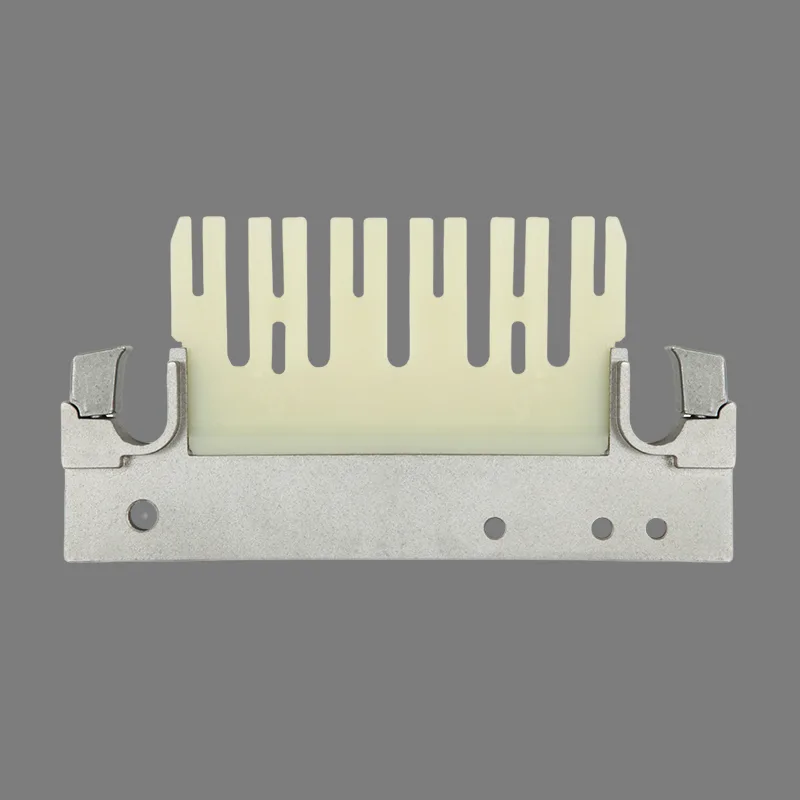
In textile spare parts purchasing, a low price is easy to compare, but supplier experience is harder to measure. Still, experience often decides whether the final purchase is smooth. A supplier familiar with warp stop motion components can understand technical language faster, ask better questions, and help buyers avoid common mistakes. This is especially valuable for overseas buyers who may not have time for repeated sample corrections.
An experienced supplier also understands that a Warp Stop Bracket must match both the machine and the maintenance routine. A beautiful product photo does not prove that the part will perform well in a busy weaving mill. What matters is stable manufacturing, repeatable dimensions, practical material selection, and the ability to support communication before and after the order.
Changshu Changxin Textile Equipment Co., Ltd. serves textile equipment users with a product range connected to warp stop motion systems, including brackets, bars, boxes, bases, divider strips, and related machine components. For buyers, this product background is useful because it means the company is not treating the Warp Stop Bracket as an isolated metal or plastic part. It understands the bracket as part of a broader weaving machine support system.
A strong supplier relationship can also improve inventory planning. If a mill knows which bracket types are suitable for specific loom models, it can prepare spare parts in advance, reduce emergency orders, and avoid mixing incompatible parts in storage. Over time, this reduces pressure on both procurement and maintenance teams.
| Buying Only by Price | Buying with Technical Confirmation |
|---|---|
| Higher risk of wrong dimensions | Dimensions are reviewed before production |
| Possible fitting problems during installation | Installation space and machine model are considered |
| Material may not match production conditions | Material can be selected according to working needs |
| After-sales discussion may be limited | Supplier can provide clearer technical feedback |
| Short-term saving may become long-term cost | More stable performance supports lower maintenance pressure |
FAQ
What is a Warp Stop Bracket used for?
A Warp Stop Bracket is used to support parts of the warp stop motion system in a weaving machine. Its role is to help keep the structure stable, properly positioned, and easier to maintain during yarn break monitoring and loom operation.
Is one Warp Stop Bracket suitable for all loom models?
Not always. Different looms may have different installation spaces, frame structures, widths, and fixing methods. Buyers should confirm the loom model and bracket dimensions before placing an order.
Do I need a drawing before ordering?
A drawing is strongly recommended when the bracket is customized or when the existing part is not standard. Clear drawings, photos, and measurements can reduce mistakes and shorten the confirmation process.
Which material is better for a Warp Stop Bracket?
The better material depends on the loom structure and working conditions. Aluminum alloy may offer strength and stable support, while nylon structures may provide lighter weight and practical wear performance in certain applications. The final choice should match the actual installation requirement.
Why should buyers avoid choosing only the cheapest bracket?
The cheapest bracket may cost more in the long run if it causes poor fitting, frequent adjustment, unstable support, or early replacement. A well-matched bracket can reduce maintenance pressure and help keep weaving production more stable.
Can Changshu Changxin Textile Equipment Co., Ltd. support customized requirements?
Yes. Buyers can communicate loom model, installation space, dimensions, material preferences, and sample needs with Changshu Changxin Textile Equipment Co., Ltd. to confirm a more suitable Warp Stop Bracket solution.
Conclusion
A Warp Stop Bracket may be a small component, but it carries a practical responsibility inside the weaving process. It supports the warp stop motion system, helps maintain stable alignment, and reduces the chance of unnecessary downtime caused by poor fitting or weak structure. For textile mills, the right bracket is not simply the one with the lowest quotation. It is the one that fits the loom, supports daily operation, lasts through repeated use, and comes from a supplier able to understand real production problems.
Buyers who want a smoother purchasing experience should prepare machine information, photos, dimensions, and expected working conditions before ordering. With proper confirmation, a Warp Stop Bracket can become a reliable part of the mill’s maintenance plan rather than another source of uncertainty.
Ready to Choose a More Suitable Warp Stop Bracket?
If your weaving mill is dealing with bracket replacement, unstable support, mixed loom models, or customized installation requirements, Changshu Changxin Textile Equipment Co., Ltd. can help you review the details and find a practical solution. Share your loom model, bracket dimensions, photos, or drawings with our team, and we will help you evaluate the next step with clear communication and dependable product support. For quotation, customization, or technical discussion, please contact us today.