


In weaving production, many quality problems begin long before fabric inspection. A warp yarn that rubs against its neighbor, a small misalignment in the warp stop area, or an unstable separating structure can gradually lead to broken ends, uneven tension, fuzzy yarn surfaces, and unexpected machine stoppages. A Middle Yarn Dividing Frame may look like a modest loom component, but it plays a practical role in keeping warp yarns orderly, separated, and easier to monitor during high-speed weaving.
This article explains how a Middle Yarn Dividing Frame supports shuttleless loom operation, what purchasing teams should evaluate before choosing one, and how textile mills can reduce downtime by paying attention to material, groove spacing, installation fit, and long-term wear resistance. For buyers comparing textile machine accessories, Changshu Changxin Textile Equipment Co., Ltd. provides a useful reference point for understanding how yarn separation parts are designed for real weaving environments rather than only catalog specifications.
Article Summary
A Middle Yarn Dividing Frame helps separate warp yarns in the warp stop system of shuttleless looms, reducing unnecessary friction, yarn entanglement, and unstable yarn paths. For weaving mills, the right frame can improve production continuity, support fabric consistency, and make installation or replacement easier. The key is not simply buying a “standard part,” but selecting a component that matches loom type, warp density, yarn material, groove spacing, and operating conditions.
Table of Contents
- Article Outline
- Why Does Warp Separation Matter More Than Many Mills Expect?
- What Does a Middle Yarn Dividing Frame Actually Do?
- Which Production Pain Points Can It Help Reduce?
- How Should Buyers Choose the Right Frame?
- Middle Yarn Dividing Frame Selection Table
- How Can Proper Installation Improve Long-Term Performance?
- Why Should Supplier Experience Matter?
- FAQ
- Conclusion
Article Outline
- Explain why warp separation affects weaving stability.
- Describe the working role of a Middle Yarn Dividing Frame.
- Connect the component to common mill problems such as broken yarns, hairiness, friction, and stoppages.
- Provide a buyer-focused checklist for material, groove spacing, loom compatibility, and installation.
- Compare key selection factors in a practical table.
- Share maintenance and replacement considerations for long-term use.
- Answer frequently asked questions from purchasing teams and weaving technicians.
Why Does Warp Separation Matter More Than Many Mills Expect?
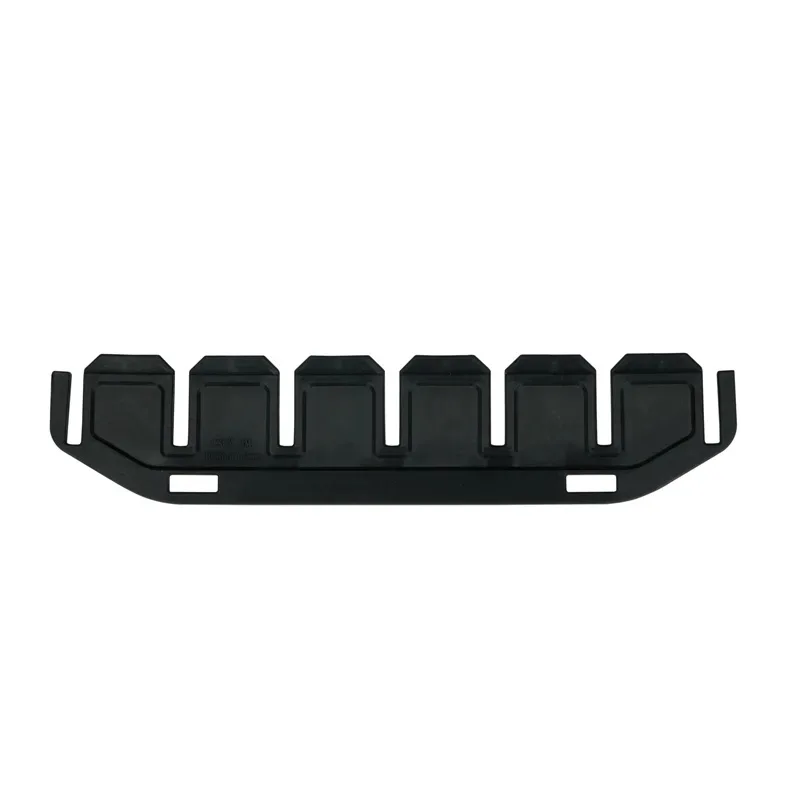
In a busy weaving workshop, attention often goes first to large equipment: the loom, the motor, the control system, or the warp stop motion. Smaller guiding and separating parts are sometimes treated as low-priority consumables. That is a risky habit. When warp yarns do not run in a clean and controlled path, every meter of fabric carries the hidden cost of friction, unstable tension, and possible yarn damage.
Warp yarns move under continuous stress. Even a slight contact point can create repeated rubbing. Over time, this can lead to fuzz, weak spots, end breakage, unclear warp stop detection, and inconsistent fabric surface quality. For mills producing cotton fabrics, chemical fiber fabrics, blended fabrics, elastic materials, home textiles, industrial cloth, or apparel fabrics, the cost is rarely limited to one broken yarn. It can involve stopped machines, wasted labor, delayed delivery, and lower customer confidence.
A well-designed Middle Yarn Dividing Frame helps create order in this demanding area. It supports a stable separation distance between warp yarns, reduces unnecessary crossing, and gives the warp stop system a cleaner working environment. In plain language, it helps the loom “read” the warp condition more reliably and helps yarns travel with less disturbance.
What Does a Middle Yarn Dividing Frame Actually Do?
A Middle Yarn Dividing Frame is used around the warp stop area of shuttleless looms to separate, guide, and organize warp yarns. Its job is not to pull yarn or change the weaving pattern. Instead, it provides a controlled physical structure that helps prevent warp yarns from gathering, crossing, rubbing excessively, or interfering with neighboring yarn paths.
In shuttleless loom operation, the warp stop motion must respond quickly when yarn breaks. If the yarn path is messy, the detection area becomes less stable. If yarns are crowded together, friction increases. If the dividing frame is not accurately made, the separation may appear acceptable during installation but become troublesome during continuous running.
A dependable Middle Yarn Dividing Frame usually needs three things: suitable material, accurate spacing, and a smooth surface. Material affects durability and yarn protection. Spacing affects separation accuracy. Surface finish affects friction and yarn hairiness. These details may look small on paper, but they are exactly the details that weaving technicians notice when a loom runs for long shifts.
- Separates warp yarns to reduce tangling and crossing.
- Guides yarn movement through a more orderly path.
- Supports warp stop motion stability by keeping the detection area cleaner.
- Reduces unnecessary friction that may cause yarn hairiness or breakage.
- Improves installation consistency when the frame is matched with the correct base or seat.
Which Production Pain Points Can It Help Reduce?
Textile mills do not buy loom accessories for decoration. They buy them because every production stop has a cost. When the wrong separating frame is used, or when an old frame becomes worn, several practical issues may begin to appear.
The first issue is yarn breakage. When yarns rub against rough or poorly spaced surfaces, the yarn body may weaken before operators notice anything unusual. The second issue is hairiness. This is especially frustrating because it may not stop the loom immediately, but it can affect fabric appearance and downstream finishing. The third issue is uneven warp behavior. When yarns do not stay properly separated, tension differences become harder to manage.
Another pain point is replacement uncertainty. Purchasing teams may know the loom brand or machine model, but they may not know the exact matching requirement for the yarn dividing component. A supplier that understands loom accessories can help reduce the risk of buying a part that looks right but does not fit smoothly in actual production.
For this reason, a Middle Yarn Dividing Frame should be evaluated as a functional production component. The correct choice may help reduce:
- frequent warp yarn breakage during high-speed operation;
- fabric defects caused by unstable yarn separation;
- excessive yarn friction and surface fuzz;
- longer installation or adjustment time;
- unexpected downtime caused by poor component fit;
- higher maintenance pressure on operators and technicians.
How Should Buyers Choose the Right Frame?
The best Middle Yarn Dividing Frame is not always the cheapest part or the one with the most general description. It is the one that fits the loom, protects the yarn, and keeps its shape and function during repeated operation.
Buyers should begin with loom compatibility. Shuttleless looms may include air-jet looms, water-jet looms, and rapier looms, and each machine may have different installation structures in the warp stop area. If the frame is intended for a specific row arrangement or a specific warp stop base, that information should be confirmed before ordering.
The second factor is yarn type. Cotton yarn, chemical fiber yarn, blended yarn, and elastic yarn behave differently under friction and tension. A smooth, durable, and lightweight material can help reduce yarn damage, especially when the loom operates continuously.
The third factor is groove spacing. Inaccurate spacing can cause uneven yarn separation. This is where low-quality parts often create hidden losses. A frame may look simple, but if the dividing grooves are inconsistent, the result can be unstable warp arrangement and more frequent adjustment work.
The fourth factor is surface finish. A rough surface can increase yarn hairiness. A polished and carefully finished surface helps yarns move with lower resistance. For weaving mills focused on fabric quality, this detail deserves close attention.
Middle Yarn Dividing Frame Selection Table
| Selection Factor | Why It Matters | What Buyers Should Confirm |
|---|---|---|
| Loom compatibility | A mismatched frame can increase installation time or fail to support stable yarn separation. | Loom type, warp stop motion structure, row arrangement, and base design. |
| Material quality | Material affects durability, weight, impact resistance, and yarn protection. | Whether the material is tough, stable, lightweight, and suitable for long-term use. |
| Groove spacing | Accurate spacing supports uniform warp separation and reduces weaving instability. | Required yarn density, spacing tolerance, and customization options. |
| Surface finish | A smoother surface can reduce friction, yarn fuzz, and breakage risk. | Polishing quality, edge smoothness, and yarn contact areas. |
| Installation fit | Easy installation helps reduce maintenance time and operator workload. | Whether matching seats, bases, or guide structures are available. |
How Can Proper Installation Improve Long-Term Performance?
Even a good Middle Yarn Dividing Frame can underperform if it is installed carelessly. The frame should sit firmly in the correct position, align with the warp path, and avoid unnecessary pressure on the yarns. During installation, technicians should check whether the frame is stable, whether the grooves correspond to the required yarn arrangement, and whether the yarns pass smoothly through the separation area.
After installation, the first production run should be treated as a performance check. Operators can observe whether yarns move evenly, whether any position shows abnormal friction, and whether the warp stop motion responds normally. If a yarn repeatedly breaks in one area, the cause may not be the yarn itself. It may be alignment, surface contact, or an unsuitable frame specification.
Maintenance is also straightforward but important. The dividing frame should be inspected during regular loom maintenance. Dust, lint, and yarn residue should be removed. Worn edges, deformation, cracked areas, or loose installation points should be handled quickly. Waiting until a small part causes repeated stoppages is usually more expensive than replacing it at the right time.
- Check alignment before full-speed operation.
- Confirm yarns are separated without forced bending.
- Inspect contact surfaces for roughness or wear.
- Clean lint accumulation during routine maintenance.
- Replace damaged frames before they affect fabric quality.
Why Should Supplier Experience Matter?
A Middle Yarn Dividing Frame is a small component, but it is connected to a very specific working environment. A supplier who only understands plastic parts may not fully understand weaving pressure, yarn movement, loom compatibility, or warp stop system requirements. For purchasing teams, supplier experience can reduce communication costs and help avoid repeated trial orders.
Changshu Changxin Textile Equipment Co., Ltd. focuses on textile equipment components used in loom operation, which makes the company relevant for mills that need more than a simple spare part quotation. Buyers often need practical answers: Which specification fits my loom? Can the spacing match my yarn density? Is the material suitable for my fabric type? Can the frame support stable operation in long shifts?
The value of supplier experience appears in these details. A suitable supplier should be able to discuss application scenarios, not just dimensions. It should understand that a weaving mill cares about downtime, fabric quality, installation convenience, and long-term supply stability. That is why the buying decision should consider technical communication, product consistency, and after-sales support together.
FAQ
1. What is a Middle Yarn Dividing Frame used for?
It is used to separate and guide warp yarns around the warp stop area of shuttleless looms. Its main purpose is to help keep yarns orderly, reduce friction, and support stable warp stop motion performance.
2. Is a Middle Yarn Dividing Frame only suitable for one loom type?
Not necessarily. It may be used in different shuttleless loom applications, but the exact specification should match the loom structure, row arrangement, and installation base. Buyers should confirm compatibility before ordering.
3. Why does groove spacing matter?
Groove spacing affects how evenly warp yarns are separated. If the spacing is inaccurate or unsuitable for the yarn density, the warp path may become unstable and increase the risk of rubbing, breakage, or fabric defects.
4. Can this component help reduce yarn breakage?
Yes, when properly selected and installed, a Middle Yarn Dividing Frame can reduce unnecessary friction and yarn crossing, which may help lower the risk of breakage during continuous weaving.
5. What should buyers provide when requesting a quotation?
Buyers should provide loom type, warp stop motion structure, required frame size, yarn density, yarn material, quantity, and any special installation requirements. Photos or drawings can also help the supplier confirm the correct specification.
6. How often should the frame be inspected?
It should be checked during routine loom maintenance. If operators notice repeated yarn breakage, abnormal friction, poor separation, or visible wear, the frame should be inspected immediately.
Conclusion
A Middle Yarn Dividing Frame may not be the largest part of a shuttleless loom, but it can influence yarn movement, warp stop stability, and fabric production quality in a very direct way. For weaving mills, the right frame helps reduce friction, organize warp yarns, support smoother machine operation, and lower the hidden costs caused by stoppages and defects.
When selecting this component, buyers should look beyond price alone. Material, surface finish, groove spacing, loom compatibility, installation fit, and supplier support all deserve careful attention. A small difference in component quality can become a large difference in production stability.
If your mill is comparing Middle Yarn Dividing Frame options for shuttleless loom applications, Changshu Changxin Textile Equipment Co., Ltd. can help you review specifications, match practical weaving needs, and choose a suitable solution for stable warp separation. For product details, quotation support, or customized requirements, please contact us and our team will help you move from selection to production with more confidence.